


Are You Getting the Job?
You’re in an interview right now.
You just don’t know it.
A business owner just searched:
“tax advisor near me”
“accountant for construction companies”
“CPA for high-income families”
Your firm appeared.
They clicked.
And in less than a second — before reading a single word — they made a judgment about you.
According to research from the Nielsen Norman Group, users form an opinion about a website in roughly 0.05 seconds.
Modern buyers don’t begin relationships with phone calls.
They begin with silent evaluations.
And your website?
That’s the first interview.

The Interview Happens Before You Ever Speak
There was a time when referrals carried the entire relationship.
You inherited trust.
You built rapport in person.
You closed the deal across a desk.
That’s not how buying works anymore.
Google coined the term Zero Moment of Truth (ZMOT) to describe the moment buyers research before contacting a business.
By the time someone schedules a consultation, they’ve already:
- Compared you to competitors
- Reviewed your credentials
- Evaluated your authority
- Assessed your credibility
- Decided whether you “feel” like the right fit
Stanford research found that 75% of users judge a company’s credibility based on its website design.
And according to the Edelman Trust Barometer, trust is one of the strongest drivers of purchasing decisions across industries.
Translation?
By the time they talk to you…
They’ve already formed a conclusion.
Your website just confirms it.
Or contradicts it.
Watch: Clients Decide in 5 Seconds — Here’s How It Impacts Your Revenue
The Six Silent Questions Every Prospect Asks
When someone lands on your website, they are not asking:
“How long have you been in business?”
They’re asking something far more revealing.
1. Do You Work With People Like Me?
If your homepage says:
“We serve individuals and businesses of all sizes.”
You just failed the first test.
Modern buyers crave relevance.
Specificity signals confidence.
Vagueness signals commoditization.
A construction company wants to see:
- Job costing expertise
- Cash flow forecasting
- Equipment depreciation strategy
A dual-income household wants:
- Equity compensation guidance
- Year-round tax planning
- Multi-state tax expertise
If they don’t see themselves reflected in your messaging…
They move on.
2. Do You Understand My Problems?
Listing services is not empathy.
“We provide comprehensive tax and accounting solutions.”
That’s not understanding.
That’s filler.
Clients want to feel seen.
They want language that reflects:
- Their stress
- Their ambitions
- Their complexity
- Their fears
If your website speaks in generic accounting terminology instead of client-specific challenges…
You fail the emotional part of the interview.
And professional services are emotional purchases.
3. Are You Modern?
This one is brutal.
Outdated design.
Cluttered layouts.
PDF-heavy navigation.
No online scheduling.
No clear next step.
All of it whispers:
“We are reactive.”
In a world shaped by AI search, digital-first expectations, and instant access — modern presentation signals operational competence.
HubSpot consistently reports that a company’s website is the top source of inbound leads for B2B organizations.
Your website isn’t a brochure anymore.
It’s infrastructure.
And infrastructure must feel current.
4. Are You Relatable?
This is the one most firms miss.
Professional doesn’t mean distant.
Authority doesn’t require stiffness.
Buyers want expertise.
But they also want:
- Humanity
- Perspective
- Voice
- Values
Does your website feel like it was written by a person?
Or assembled from an accounting template generator?
Your About page shouldn’t read like a résumé.
It should answer:
- Why do you care about this work?
- What do you believe about client relationships?
- What kind of clients thrive with you?
- What kind don’t?
Connection builds trust.
Trust builds revenue.
And in professional services, trust is currency.
5. How Do You Work?
This is critical — and often invisible.
Prospects want to know:
- Is this firm proactive?
- Do they meet quarterly?
- Is communication structured?
- Do they use modern tools?
- Is onboarding chaotic or seamless?
If your website doesn’t explain your process…
Prospects assume you don’t have one.
Clear process equals confidence.
Confidence equals premium positioning.
6. Will You Be Responsive?
This question is rarely spoken out loud.
But it’s always present.
Signals of responsiveness include:
- Clear calls to action
- Easy scheduling
- Modern intake forms
- Active blog content
- Recent reviews
If your blog hasn’t been updated in three years…
If your last Google review was 18 months ago…
If your contact form disappears into a black hole…
You fail the reliability test.
Momentum matters.
Freshness signals vitality.
And vitality signals stability.
Why Most Accounting Firm Websites Fail
Let’s be honest.
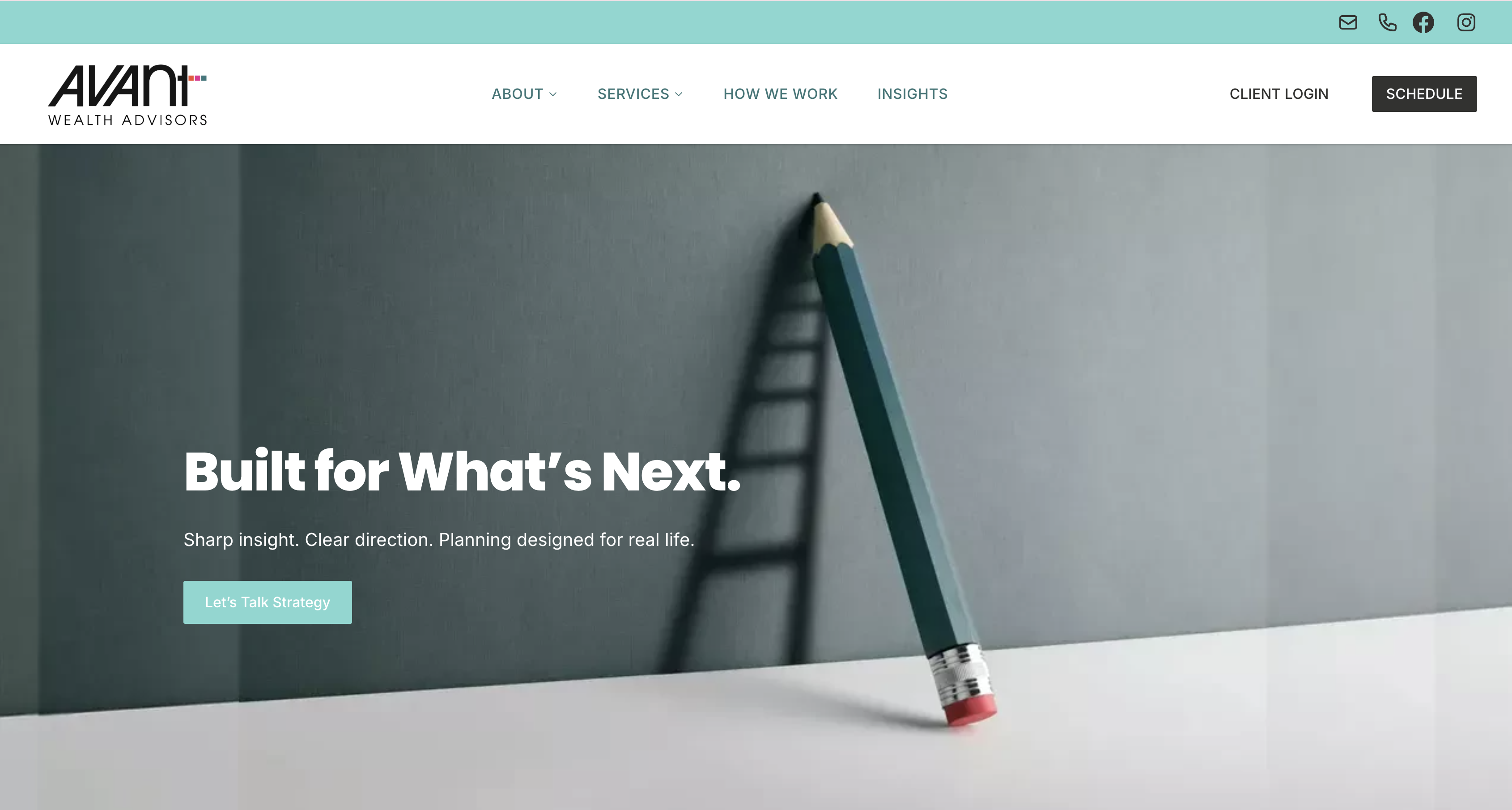
Most firm websites look like this:
- “Trusted Since 1987”
- Stock photos of smiling professionals
- A laundry list of services
- A generic mission statement
- No defined audience
- No point of view
It’s safe.
Safe feels neutral.
Neutral feels interchangeable.
And interchangeable gets compared on price.
In an AI-indexed world, neutrality is invisible.
Google’s evolving search experience now summarizes expertise directly in results.
AI tools like ChatGPT and Perplexity increasingly reference structured, authoritative content when recommending firms.
Authority is no longer implied.
It’s indexed.
And if your website lacks specificity, structure, and signals of thought leadership…
You don’t just lose the interview.
You don’t get shortlisted.
From Brochure to Positioning Engine
Your website should not:
- List information
- Recite credentials
- Archive PDFs
It should:
- Clarify who you are for
- Disqualify the wrong clients
- Demonstrate expertise
- Articulate your beliefs
- Show how you work
- Make the next step obvious
This is positioning.
And positioning changes the type of clients you attract.
Related: Why Most Accounting Firm Websites Look Exactly the Same
Your Pages, Reimagined as Interview Stages
Your homepage = The handshake
Clear. Specific. Confident.
Your About page = “Tell me about yourself.”
Belief-driven. Human. Differentiated.
Your Services page = Qualifications
Outcome-focused. Not inventory.
Your Reviews = References
Fresh. Visible. Specific.
Your Blog = Ongoing proof
Timely. Strategic. Authoritative.
Each piece reinforces the narrative:
This firm knows who it’s for.
This firm understands complexity.
This firm is modern.
This firm is structured.
This firm is trustworthy.
The Firms Winning Right Now Do Three Things
1. They Pick a Lane
Even if they serve multiple audiences, they speak clearly to one at a time.
Specific firms get remembered.
Generic firms get compared.
2. They Lead With Narrative
They articulate:
- What they believe about tax planning
- What they stand against
- How they think differently
- Why their approach produces better outcomes
That’s differentiation.
Not decoration.
3. They Treat Marketing as Infrastructure
Not a side project.
Not a redesign every five years.
Marketing is the relationship layer.
It’s the system that:
- Attracts
- Filters
- Builds trust
- Reinforces authority
- Scales without you in the room
It works before the phone rings.
The Hard Question
If your website were a candidate…
Would you hire it?
Would you feel confident sending it into a room full of high-value prospects?
Or would you say:
“It’s fine.”
Fine doesn’t attract advisory clients.
Fine doesn’t command premium fees.
Fine doesn’t survive AI-driven visibility shifts.
Because Here’s the Truth
By the time someone contacts your firm…
They’ve already decided.
Your website just validated it.
Or disqualified you.
In 2026 and beyond…
Your website isn’t marketing.
It’s your first interview.
And you’re either getting the job.
Or you’re not.
Start your online journey with CountingWorks PRO here.