Most accountants don't struggle with client interviews because they lack expertise. They struggle because tax season compresses everything—meetings stack up, calendars fill, and there’s rarely enough time to review years of client history before every conversation.
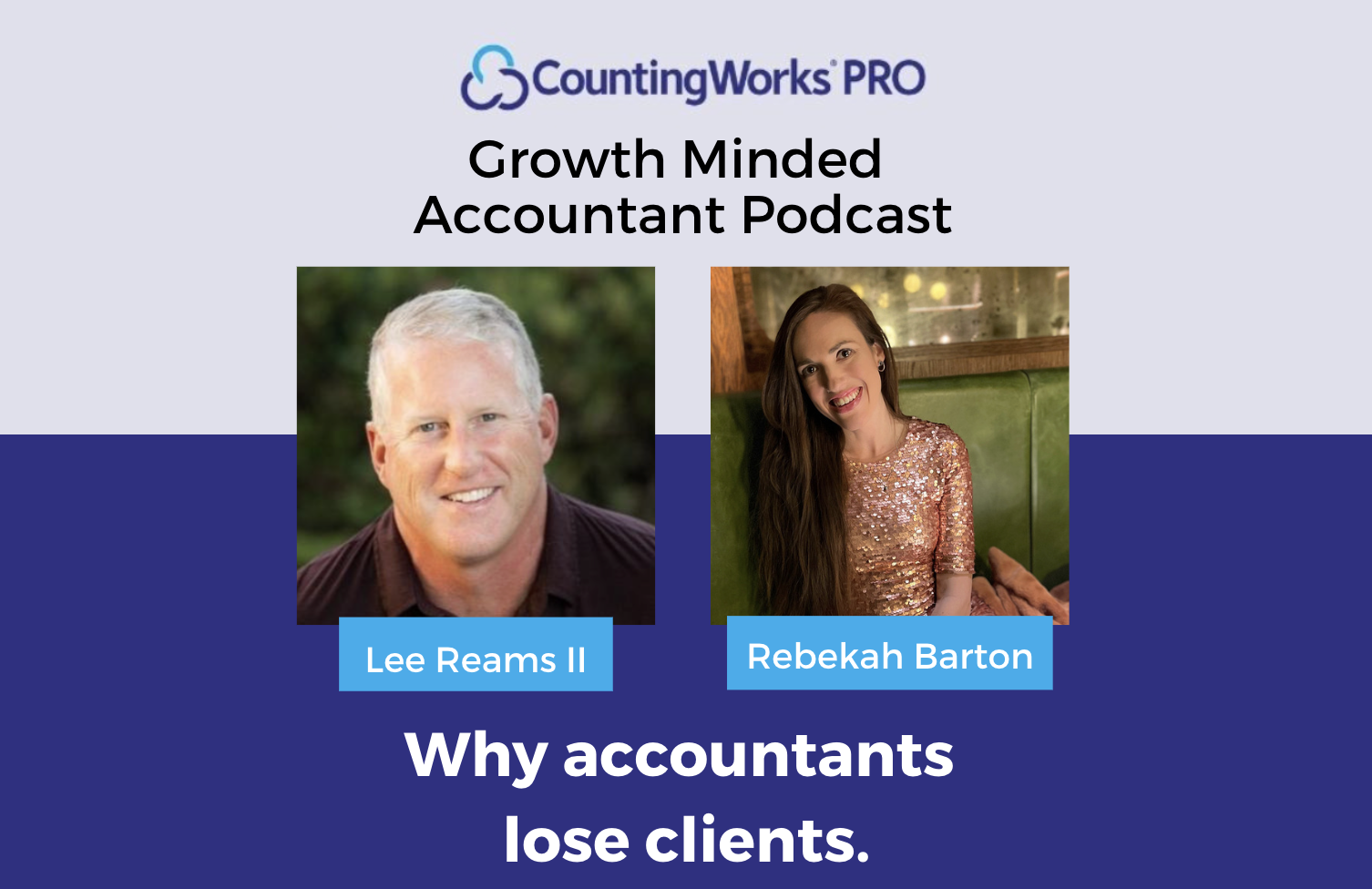
In this episode of the Growth Minded Accountant Podcast, Lee Reams shares a simple five-minute preparation framework that helps tax professionals, CPAs, EAs, and accounting firm owners walk into every client meeting informed, confident, and ready to provide strategic guidance.
Rather than relying on memory, Lee explains how modern firms are using AI tools such as MAX to review prior-year tax returns, analyze financial documents, identify trends, and generate thoughtful interview questions before the meeting even begins. The goal isn't perfect preparation—it's gaining enough context to ask better questions, uncover advisory opportunities, and create a more valuable client experience.
You'll learn how to use AI as a thinking partner, how to generate personalized client interview checklists, and why even five minutes of preparation can completely change the quality of a client conversation.
Want to identify hidden growth opportunities inside your firm?
Get a free Growth Breakdown from CountingWorks PRO and see how your firm's positioning, systems, client experience, and advisory readiness compare to modern growth-minded firms.
We know that everyone digests information differently. That’s why we’re now sharing the full transcript of each episode of The Growth Minded Accountant right here on the CountingWorks PRO blog. Whether you’re short on time, like to scan and highlight, or simply prefer reading over listening, you can catch up on every conversation at your own pace.
Each week, we cover topics that matter most to tax and accounting professionals—from AI and automation to marketing strategies, firm growth, and client relationships. Scroll down to read the full episode, or subscribe to the podcast to listen on the go.
Welcome to the Growth Minded Accountant Podcast, where our experts share best practices for running your firm in the digital age. This podcast is brought to you by CountingWorks PRO.
Welcome back to another episode of the Growth Minded Accountant Podcast. Today's topic is how to prepare for a client interview in five minutes or less using AI.
As part of our ongoing tax-season micro-episodes, I want to paint a picture that will probably feel familiar to many of you. Most accountants don't feel unprepared for client interviews because they don't care. The reality is that tax season creates an environment where meetings are stacked back-to-back, calendars are overloaded, and there simply isn't enough time to review every client's history before every conversation.
A calendar reminder pops up telling you it's time to meet with a client. Maybe you've worked with them for years. Maybe another team member handled their account recently. Maybe there aren't detailed notes available, or perhaps there isn't a concise summary of what's changed in their life or business since your last meeting. Suddenly, you're expected to recall years of history and context on the spot.
The challenge isn't a lack of expertise. The challenge is a lack of preparation time.
The good news is that the goal isn't perfect preparation. The goal is directional awareness.
You don't need thirty minutes to prepare for a great client interview. In most cases, you only need about five minutes, and AI can help make that possible.
Traditionally, accountants prepare by quickly skimming last year's tax return, scanning documents during the meeting, and hoping important insights surface as the conversation unfolds. You may begin with a broad question and then try to identify opportunities in real time.
Today, AI provides a much better approach.
AI can review prior-year tax returns, compare financial information, analyze uploaded documents, identify patterns, recognize changes, and surface opportunities before the meeting even begins. It can recommend discussion topics, identify areas that deserve attention, and generate personalized interview questions based on the client's historical data.
The result is better conversations, better information gathering, and ultimately better outcomes for your clients.
Think about clients you've worked with for five or ten years. During that time, there may have been income changes, career transitions, new businesses, children, aging parents, real estate transactions, retirement planning decisions, or countless other life events.
You are not expected to keep every detail about every client at the front of your mind.
Tax season punishes memory gaps, which is exactly why AI can be such a valuable thinking partner.
Notice I said thinking partner, not replacement.
AI is doing the background work that helps you arrive at the meeting informed and prepared. It can surface trends, identify opportunities, and highlight discussion points in seconds.
Here's a simple workflow.
Start by gathering the information you already have. This isn't additional work. You already possess last year's tax return. Business clients often have financial statements available. Tax clients have uploaded documents. If you're using tools like MAX within CountingWorks PRO, that information can be incorporated into the process automatically.
If your CRM includes meeting notes and client history, those inputs become even more valuable. The more context the AI has available, the more useful the output becomes.
A simple prompt might look like this:
"Review the attached prior-year tax return and financials. Summarize any notable changes, trends, or potential discussion points I should be aware of for an upcoming client interview. Then generate five thoughtful questions I can ask to better understand the client's situation and future plans."
That's all you're really trying to accomplish.
This process isn't about generating tax advice. It's about preparing for a conversation.
You're using AI to identify areas that deserve discussion so you can enter the meeting with greater awareness and ask better questions.
At CountingWorks, this is one of the ways we use MAX internally. The system can generate personalized client interview checklists in moments because it has access to historical information, tax returns, financial statements, uploaded documents, and prior interactions.
Instead of memorizing every detail about every client, advisors can focus on preparing for the conversation itself.
That five minutes of preparation can completely change the tone of a meeting.
Clients notice when you are prepared. They notice when you remember important details. They notice when your questions are thoughtful and relevant to their situation.
You don't need thirty minutes to prepare.
You need the right information surfaced quickly.
Upload the client's prior-year return and financial information into an AI tool and ask three simple questions:
The system can then generate a customized interview checklist, summarize key changes, and create personalized questions that guide the conversation.
If you're using a purpose-built solution like MAX, you'll often receive even more context and more detailed recommendations because the system already understands the client's history.
Many firms use either an interview checklist or an intake form to support this process. Both approaches help ensure that important information isn't overlooked and that every client receives a more personalized experience.
The technology isn't the point.
The habit is.
You don't need to relearn your entire workflow. You don't need to hire another assistant. You simply need a better way to prepare.
Tax season doesn't excuse poor preparation. Clients notice when meetings feel rushed. They notice when advisors seem distracted or uninformed. The experience is similar to talking with a professional who clearly wants to end the conversation as quickly as possible.
That's not the experience most firms want to create.
Preparation communicates professionalism.
Preparation communicates care.
Preparation creates trust.
This is another reason we've been producing these short tax-season episodes. We've already discussed how to begin an interview, how to close an interview, and how to use open-ended questions to create stronger conversations. This episode focused on preparation.
Whether you're meeting with a tax client, a bookkeeping client, or a long-term advisory client, preparation matters.
I hope these ideas are helpful. We'll continue producing these short episodes through the end of tax season and sharing practical ways to improve client relationships, create advisory opportunities, and deliver a better client experience.
Thank you for listening to the Growth Minded Accountant Podcast. Thank you for subscribing and following along. We appreciate your support and look forward to seeing you next week.
Source transcript:
Q: Why do accountants often feel unprepared for client interviews during tax season?
Tax season creates packed schedules, back-to-back meetings, and limited time to review historical client information. Even experienced professionals can struggle to keep every client detail top of mind.
Q: How can AI help accountants prepare for client meetings?
AI can review prior-year tax returns, compare financial data, identify trends, summarize important information, and generate thoughtful discussion questions before a meeting.
Q: Does AI replace professional judgment during client interviews?
No. AI helps surface information and create talking points, but the accountant remains responsible for interpreting information and providing professional guidance.
Q: What documents should accountants use when preparing with AI?
Prior-year tax returns, financial statements, uploaded tax documents, client notes, CRM records, and previous meeting summaries can all provide valuable context.
Q: How much preparation time is necessary before a client meeting?
Lee argues that even five focused minutes of preparation can dramatically improve the quality of a client interview.
Q: What is the biggest benefit of using AI before a client interview?
AI helps identify opportunities, trends, and questions that may otherwise be overlooked during a busy tax season.
Listen to other podcast episodes or read other related blog articles with relevant information and insights.