


For many tax and accounting firms, Social Security questions are already showing up inside client conversations. A client turns 62 and asks whether they should start benefits. A married couple wants to know if one spouse should claim before the other. A business owner is preparing to retire and wondering how Social Security fits with IRA withdrawals, Roth conversions, Medicare premiums, and the eventual sale of the business.
These are not random questions. They are flashing advisory signals.
Social Security is one of the largest and most dependable income sources many Americans will ever receive, yet many clients make claiming decisions based on incomplete information, online calculators, or casual advice from friends and family. They often treat Social Security as a simple timing question instead of a cornerstone of a broader retirement income and tax strategy.
That creates a defining choice for modern firms: Will you continue answering these questions informally, often giving away high-value advisory insight for free, or will you turn them into a structured, scalable advisory service? For firms looking to shift from reactive compliance to proactive growth, the opportunity is not just knowing the Social Security rules. The opportunity is knowing how to productize the conversation.
Why Social Security Advisory Matters
Most clients know they can begin claiming Social Security retirement benefits as early as age 62. Many also know that waiting can increase their monthly benefit. But they often do not understand the long-term tradeoffs, the tax consequences, or the impact on a surviving spouse.
Claiming early can permanently reduce monthly benefits, while delaying after full retirement age can increase benefits through delayed retirement credits until age 70. That decision can affect income for decades. For married couples, it can also affect household cash flow, spousal income, and survivor benefits.
For clients with retirement accounts, pensions, investments, business income, or future Roth conversion opportunities, the decision may also affect tax planning. That is why Social Security advisory fits naturally inside a modern tax and accounting practice.
The Reality: It is not just a retirement benefit conversation. It is a tax, income, Medicare, and planning conversation.
The Money at Stake Is Significant
Social Security advisory should not be dismissed as a small planning topic. Depending on the client’s earnings record, marital status, claiming age, health, longevity, survivor needs, and other retirement income sources, the timing and coordination of benefits may influence tens of thousands of dollars of lifetime income.
That does not mean every client should delay benefits. It does not mean there is one perfect claiming strategy. It means the decision deserves more than a guess. Clients may need help evaluating whether to claim at 62, Full Retirement Age, or 70. They may need to understand what happens if they keep working while receiving benefits, how their spouse’s benefit affects the decision, what happens to survivor benefits, and how IRA withdrawals may affect the taxation of their benefits.
They may also need to coordinate Social Security with Roth conversions, Medicare premium exposure, business sale income, capital gains, or estimated tax payments. These are exactly the kinds of questions clients already bring to trusted tax professionals. The difference is whether the firm answers them informally or turns them into a structured advisory service.
Why Tax Professionals Are Well Positioned
Social Security planning overlaps with many areas tax and accounting professionals already understand. The value is not limited to explaining when a client can file for benefits. The value comes from helping clients understand how Social Security interacts with the rest of their financial life.
Social Security may connect directly to:
- Federal income taxation of benefits
- IRA and 401(k) withdrawals & Required Minimum Distributions (RMDs)
- Pension income & capital gains
- Roth conversion planning & business exit planning
- Medicare premiums & estimated tax payments
Many clients do not see these connections on their own. A tax professional often can. That gives firms a natural opening to move from compliance work into proactive planning. It also gives firms a client-facing advisory topic that is easy to understand, timely, and emotionally relevant.
Clients may not ask about multi-year marginal rate planning. But they will ask, “Should I take Social Security now or wait?”
Social Security Is Also a Tax Planning Issue
One of the biggest surprises for clients is that Social Security benefits may be taxable. Under current federal rules, clients may pay tax on up to 85% of their Social Security benefits depending on filing status and combined income.
The Social Security Administration lists key combined income thresholds of $25,000 for individuals and $32,000 for married couples filing jointly. That makes Social Security highly relevant to tax planning. A client’s benefit taxation may be affected by IRA distributions, pension income, capital gains, investment income, rental income, business income, part-time wages, Roth conversions, and required minimum distributions.
The issue is not simply whether Social Security is taxable. The bigger issue is how retirement income sources stack together. A Roth conversion may still be a smart move. A business sale may still be the right decision. A large IRA withdrawal may be necessary. But clients should understand the ripple effects before they act. That is where advisory work creates value.
Medicare and IRMAA Add Another Planning Layer
Social Security planning often overlaps with Medicare planning. Higher-income Medicare beneficiaries may pay additional premiums through Income-Related Monthly Adjustment Amounts, commonly known as IRMAA.
This matters because a client may make an income decision today that affects Medicare premiums later. A Roth conversion, large IRA withdrawal, capital gain, business sale, rental income, partnership income, or high retirement account distribution may temporarily increase income enough to affect Medicare costs based on the tax return from two years prior.
These decisions may still be financially appropriate. The problem is when clients make them without understanding the full picture. For many clients, the advisor’s value is helping them see how Social Security, taxes, Medicare, retirement accounts, and cash flow work together.
Is Social Security Advisory Right for Every Firm?
Not every firm needs to offer every advisory service. Social Security advisory is a strong fit when the firm has enough clients who are approaching or entering retirement and would benefit from structured guidance.
It may be especially relevant if your firm serves:
- Clients age 55 to 70
- Married couples approaching retirement or widows/widowers
- Business owners preparing for exit or succession
- Clients considering Roth conversions or approaching Medicare age
- Clients who ask retirement income questions during tax season
It may be less urgent if your practice primarily serves younger clients, early-stage businesses, or clients who are not looking for individual planning services. The key question is simple: Are your clients already facing these decisions? If the answer is yes, Social Security advisory may be one of the most natural advisory services your firm can offer.
The ROI Case for Your Firm
The ROI of Social Security advisory comes from three key areas:
- Existing Client Relationships: Your firm likely already has clients approaching age 62, Full Retirement Age, Medicare eligibility, retirement account withdrawals, or business exit decisions. You do not need to start with cold leads. The opportunity already exists inside your database.
- A Defined Advisory Offer: Instead of vaguely saying, “We offer advisory services,” the firm can offer a defined engagement, such as a Social Security & Retirement Income Review. That makes the service easier to explain, easier to price, and easier for clients to understand.
- A Gateway to Broader Planning: A Social Security conversation can naturally lead to Roth conversion planning, retirement income tax planning, Medicare and IRMAA planning, estate coordination, business succession planning, and recurring advisory packages.
For example, a firm could identify 100 clients who may be approaching key Social Security or retirement decision points. If 10 of those clients engage the firm for a paid review, the firm has created new advisory revenue from clients already inside the database. If several of those clients later move into broader planning or recurring advisory relationships, the long-term ROI grows.
How to Offer Social Security Advisory
There is no single correct way to package Social Security advisory. The right model depends on your firm’s client base, capacity, pricing, and advisory maturity. The important point is to define the service before you start promoting it.
Model 1: Add Social Security Awareness to the Tax Process
The simplest approach is to make Social Security awareness part of the annual tax process. This does not mean giving away a full analysis for free. It means using tax season to identify planning triggers—such as clients approaching milestone ages or experiencing life changes—and inviting them to schedule a separate planning conversation.
- Best Fit: Firms that want to introduce advisory through the existing tax relationship.
Model 2: Offer a Free Social Security Readiness Conversation
Another approach is to offer a short introductory conversation, such as a Social Security & Retirement Readiness Call. The purpose is to determine whether the client needs a deeper advisory review, asking targeted discovery questions to surface critical planning gaps. The key here is scope control—the call should identify the need, not become an unpaid planning session.
- Best Fit: Firms that want a low-friction way to introduce advisory services.
Model 3: Create a Standalone Paid Advisory Product
For many firms, the cleanest model is a standalone paid engagement, such as a Social Security & Retirement Income Review. This engagement includes a structured review of claiming options, spousal considerations, taxability of benefits, and Medicare/IRMAA exposure. It gives the firm a clear service, defined scope, and specific deliverable.
- Best Fit: Firms that want to monetize advisory work without building a full recurring advisory package immediately.
Model 4: Include Social Security Planning in Advisory Packages
Firms that already offer comprehensive advisory packages may choose to include Social Security planning as part of a broader relationship. In this model, Social Security is not the product by itself; it becomes an integrated element of multi-year income planning, HNW advisory, or business exit packages.
- Best Fit: Firms already moving toward recurring advisory services.
Model 5: Use Social Security as the Gateway Offer
Social Security advisory can serve as an entry point into larger advisory conversations. Many clients may not immediately ask for complex tax advisory or business transition planning, but they will eagerly ask if they should take Social Security now or wait. That simple question opens the door to a broader conversation about their entire financial lifecycle.
- Best Fit: Firms that want a simple, understandable way to introduce advisory services.
Pros of Offering Social Security Advisory
Social Security advisory has several advantages for tax and accounting firms:
- It is easy for clients to understand and naturally connected to tax planning.
- It applies to a large segment of aging clients and creates a valid reason to communicate outside tax season.
- It can be packaged as a defined service, generating new advisory revenue from existing clients.
- It helps clients see the firm as proactive instead of purely compliance-driven.
Most importantly, it does not require the firm to sell investments or insurance. It simply requires the firm to recognize that clients need help understanding how Social Security fits into their tax and retirement income picture.
Cautions Before You Launch
Social Security advisory should be structured carefully. Firms should avoid promising a perfect claiming answer or guaranteeing a specific lifetime outcome. The engagement should clearly define the scope, assumptions, deliverables, and limitations.
Firms should also be mindful of professional boundaries. Social Security planning may overlap with financial planning, investment advice, insurance, estate planning, and legal issues. Tax professionals should know when to educate, when to analyze tax-related implications, and when to refer to another qualified professional.
|
What to Do |
What to Avoid |
|
Use structured, documented, and repeatable processes. |
Rely too heavily on simple, automated calculator outputs. |
|
Factor in taxes, Medicare, and survivor benefits. |
Treat married couples as two isolated, individual decisions. |
|
Maintain strict scope control on introductory calls. |
Provide complex individualized advice without a defined engagement. |
The Missing Link: Moving From Interest to Implementation
Knowing that Social Security advisory can be valuable is one thing. Actually building the marketing campaigns, training your team, segmenting your client base, creating the offer, and launching the service without disrupting your core operations is another.
Many firms do not fail at advisory because they lack technical knowledge. They fail because they lack a repeatable, client-facing system. That is where CountingWorks PRO comes in. You should not have to build an advisory growth engine from scratch. CountingWorks PRO is creating the content, playbooks, workflows, training, and Practice Intelligence tools firms need to identify advisory opportunities and act on them.
How CountingWorks PRO Helps Firms Offer Social Security Advisory
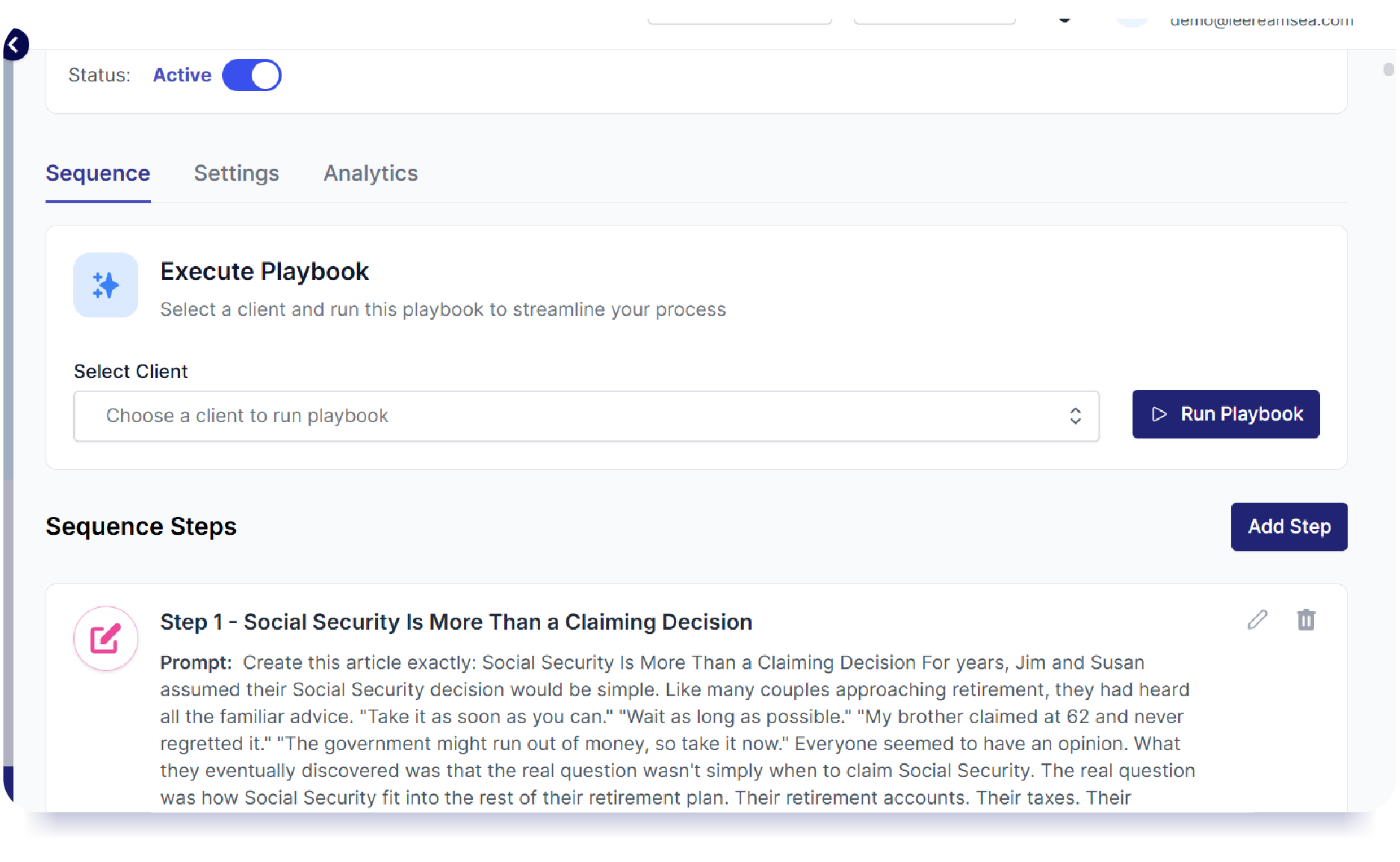
CountingWorks PRO created the Social Security Advisory Playbook to help firms move from interest to implementation.
The playbook is designed to help firms launch faster by providing practical assets and frameworks, including:
- Client-facing educational articles and FAQs
- Newsletter content and targeted outreach emails
- Social media posts and discovery call prompts
- Client checklists and proposal language
- Internal workflows and follow-up templates
The goal is not to make Social Security advisory complicated. The goal is to make it easier for firms to identify the right clients, start the right conversations, and create a clear path to advisory revenue.
Training Through TaxCPE
CountingWorks PRO also created a continuing education course to help tax professionals understand how Social Security advisory can fit into their practice.
The course is designed to help firms master where Social Security and tax planning intersect, how Medicare and IRMAA enter the conversation, which client signals indicate an opportunity, and how to effectively package and position the service while safely managing engagement scope.
Together, the course and playbook give firms both the education and the practical implementation support. The course helps the firm understand the opportunity; the playbook helps the firm act on it.
How MAX Uncovers Hidden Revenue in Your Database
The biggest hurdle to scaling advisory is not always a lack of interest—it is a lack of time to find the right opportunities. Partners and preparers cannot manually comb through every return, intake form, client note, and CRM record looking for clients who may be approaching retirement age. Even when the opportunity is there, it often stays buried.
MAX, the intelligence layer inside CountingWorks PRO, is designed to do the hunting for you.
Instead of waiting for a partner to spot a trigger, MAX scans your data to automatically surface clients who are strong candidates for a Social Security advisory conversation—instantly identifying clients age 55 to 70, married couples, widows, or business owners showing retirement signals.
MAX then helps turn those insights into next best actions. Once an opportunity is identified, the firm can use MAX to support educational outreach, personalized proposal drafts, discovery call preparation, staff task workflows, and follow-up communication.
This is where Practice Intelligence becomes invaluable. The firm is not just publishing content and hoping someone responds. It is using client data to identify who needs help, educating those clients at the exact right time, and creating a structured path toward a planning engagement.
A Practical First Step Into Advisory
Many firms want to offer more advisory services but do not know where to start. Social Security advisory is a practical starting point because it is specific, understandable, and highly relevant to clients approaching retirement. It does not require the firm to reinvent its entire business model. It can begin with a focused campaign, a defined service, and a small segment of clients.

[Identify Clients Age 58-70] ➔ [Send Educational Planning Article] ➔ [Invite to Readiness Call] ➔ [Deliver Paid Review Engagement]
That is a manageable advisory launch. Start with the clients most likely to need the guidance. Create a clear offer. Use a structured process. Measure the response. Then refine and expand.
The Bottom Line
Social Security advisory is not right for every firm. But for practices serving clients approaching retirement, it may be one of the most natural advisory opportunities available. Clients already care about the decision. The money at stake can be significant. The planning issues connect directly to taxes, retirement income, Medicare, survivor benefits, and cash flow.
The future-ready firm does not wait for clients to ask better questions. It knows when to start the conversation. Social Security advisory gives firms a practical way to do exactly that.
Ready to Explore Social Security Advisory?
CountingWorks PRO helps tax and accounting firms identify planning opportunities, educate clients, and launch advisory services with practical playbooks, content, workflows, Practice Intelligence, and training.
If your firm is looking for a realistic way to expand beyond compliance, explore the Social Security Advisory course through TaxCPE and review the CountingWorks PRO Social Security Advisory Playbook today. See firsthand how your firm can begin educating clients, starting better retirement conversations, and creating new advisory revenue from relationships you already have.